
MIFF at 29: Stronger Than Ever
It’s that time again — time for Waterville’s annual celebration of all things cinematic. The 29th annual Maine International Film Festival opens on Friday, July 10 and runs through Sunday, July 19. Back in 1998, when MIFF’s founders boldly announced their “first annual” festival and obtained letters of endorsement from the mayor of Waterville, the governor of Maine, and three members of the state’s congressional delegation, they could scarcely have imagined that their passion project would still be going strong — stronger than ever — nearly three decades later.
This year, MIFF is proud to present over 100 movies from 44 countries and representing nearly a century of filmmaking. To be precise, there will be 70 feature films and 42 shorts, not counting the student-made shorts to be screened during the Maine Student Film + Video Festival on MIFF’s second Saturday. (More on that next week.)
Screenings will take place in the three cinemas on the second floor of the Paul J. Schupf Art Center at 93 Main Street in Waterville and in the adjoining Waterville Opera House. Except where otherwise noted, screenings described in this article will be held in the Opera House during the festival’s first seven days.
Highlights of the festival’s first week include achievement awards to be presented to three veteran filmmakers, the Maine première of filmed-in-Bangor teen drama, the world première of a partially-made-in-Waterville documentary about coffee, presentations of two other Maine-related feature films, and screenings of a few neglected classic films.
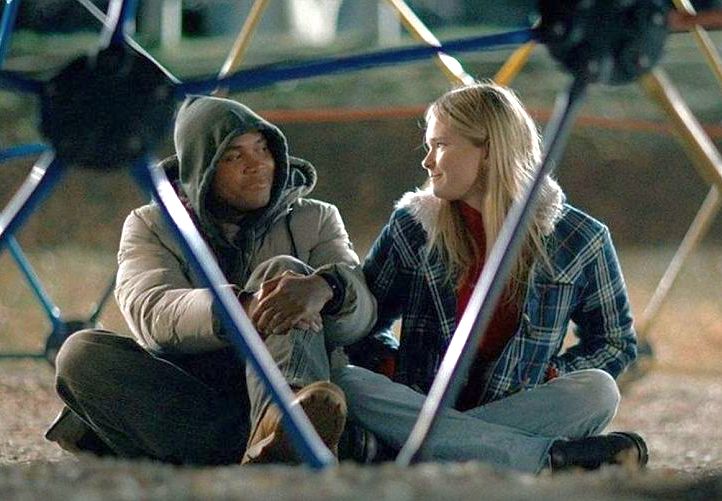
The festival will open at 6:30 Friday with Their Town, a tender coming-of-age story set and shot in Bangor. In the film, Abby (Ora Duplass) is looking forward to costarring in a high school production of Thornton Wilder’s play, Our Town, with her beau, when he suddenly drops out and is replaced by lonely stagehand Matt (Chosen Jacobs). During a nightlong ramble through nearly deserted city streets, she and Matt get to know each other and realize that they have more in common than they first realized.
The festival will also première three other, new, made-in-Maine feature films — Downeast Hardcore: Stories From the Kave, In Transit, and Mallory’s Ghost — as well as two compilations of new Maine short films. Since, however, none of those features or shorts will screen until the festival’s last few days, we’ll save further discussion of them until next week. In the mean time, there are two Maine-connected features you may want to see.
First is a new documentary that follows fathers of transgender and non-binary children, as they confront their preconceptions of masculinity and fatherhood. Filmed in various locations during a turbulent year, The Dads includes scenes shot in Bangor and on Jo Mary Lake, east of Millinocket. Given the recent Supreme Court decision allowing states to bar transgender girls from girls sports teams and the possible referendum on Maine’s November ballot to repeal the parts of the Maine Human Rights Acts that ensure that transgender students can play on teams of athletes of their new gender, the film is very timely. It has screenings Sunday at 6:20 in Cinema 3 and Wednesday at 9:40 in Cinema 2.
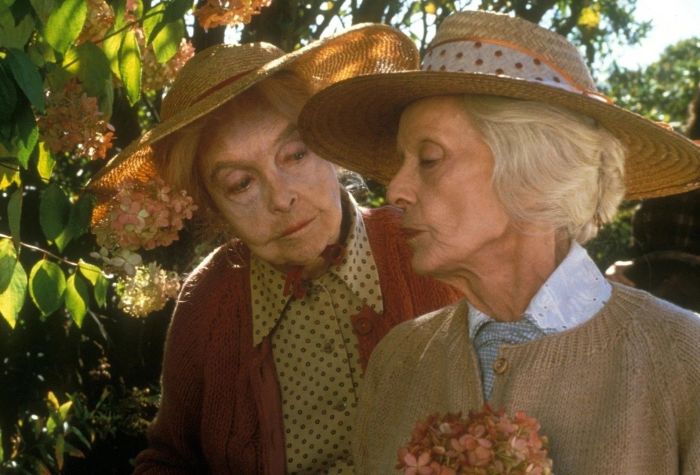
Second is The Whales of August, the 1987, Oscar-winning classic starring screen legends Bette Davis and Lillian Gish as two elderly, widowed sisters sharing a cottage on the Maine coast. Based on the eponymous play and shot on Cliff Island in Casco Bay, the film is being shown in honor of producer Mike Kaplan on Thursday at 7:00 p.m. in the Opera House.
Closer to home, local audiences will appreciate “Ikawa: Coffee That Connects” on Sunday at 1:00. Created jointly by students in Waterville, Maine, and Kigali, Rwanda, this 18-minute documentary demonstrates that coffee is not just a warm, comforting beverage, but a source of connection across cultures and continents. Sponsored by Mid-Maine Global Forum, admission to this screening is free. Afterwards, there will be question-and-answer session with some of the filmmakers and a reception featuring Rwandan delicacies. (See a related article.)
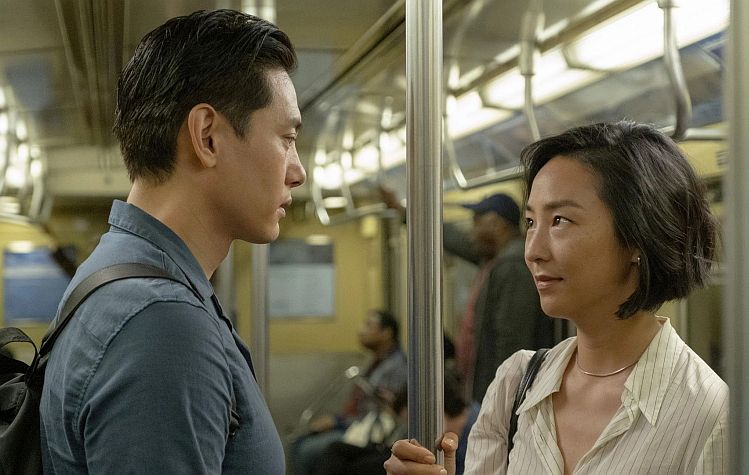
This year MIFF will, for the first time ever, present achievement awards to three filmmakers. In the past, the festival has given one, or occasionally two, awards per year. This year’s winners are producer Christine Vachon, writer and director Alan Rudolph, and producer and longtime festival supporter Mike Kaplan. Each will be honored in a separate ceremony at 7:00 p.m. in the Opera House. The ceremonies will take place two nights apart, starting with Vachon’s on Sunday and ending with Kaplan’s on Thursday. A screening of one of the honoree’s films will accompany each award presentation, and a reception at a downtown Waterville restaurant will follow. In order, the films are Past Lives (2023), Choose Me (1984), and The Whales of August (1987), and the restaurants are Cushnoc Cantina, Opa, and Amici’s Cucina. (Click to read a related article.)

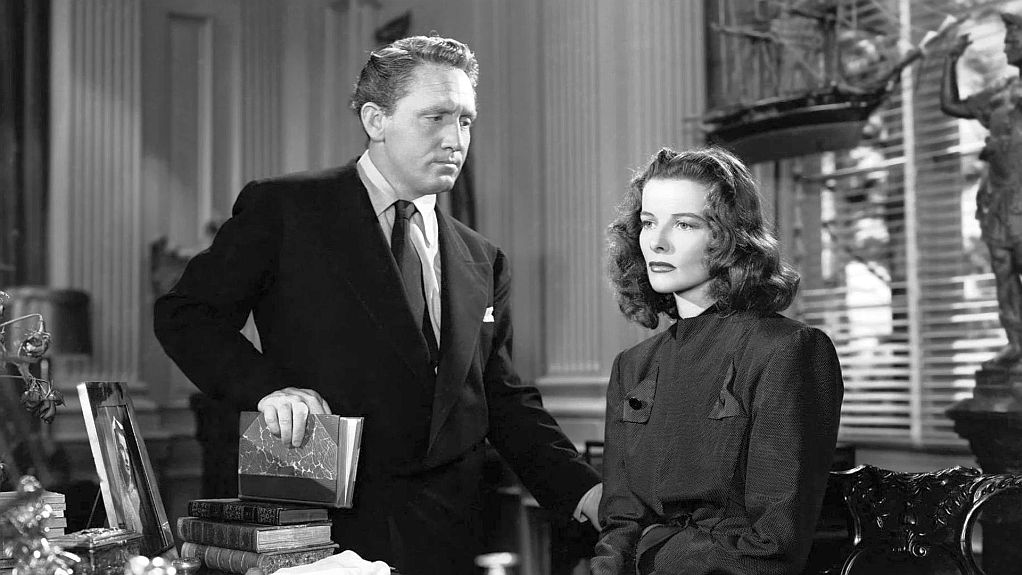
Finally, the festival will screen five, unjustly overlooked older films, most of them in sparkling, digital restorations. These “rediscoveries” include Keeper of the Flame (1942), the second-ever pairing of Katherine Hepburn and Spencer Tracy, in which Hepburn portrays the widow of war hero who died in a car crash and Tracy his would-be hagiographer (Sat., 12:00, Cinema 1); Queen Kelly (1929), the unfinished, silent epic starring glamour girl Gloria Swanson and financed by her then-boyfriend Joseph P. Kennedy, the future father of a U.S. president and two U.S. senators (Wed., 3:00, Cinema 1); and Nashville (1975), director Robert Altman’s musical love letter to that city, with interwoven storylines and 24 main actors including past MIFF honorees Keith Carradine and Michael Murphy (Wed., 7:00). To learn more about those three films as well as the other two rediscoveries, Ju Dou (1991, China) and Four Nights of a Dreamer (1971, France), please consult the festival’s catalog or website.
There will be, of course, much more going on at the festival than we could ever hope to describe in one article, or even two or three. Thus, we encourage you to explore the festival’s website, www.miff.org, on your own or to read its 68-page catalog, which is available at the Schupf Center and many other places around the area. Even if none of the films described above pique your interest — How could that be possible? — you’re bound to find some other festival offering that does. Moreover, except for The Dads, all of these films described in this article will be shown only once, so plan ahead to make sure you don’t miss something you want to see.
Except where otherwise noted, admission to festival screenings costs $15 per person. For $250, you may purchase a non-transferable, full-festival pass, which will admit you to as many screenings as you can watch. If you’re less ambitious, you can buy a “10-Pass” for $125, which is good for ten admissions, up to two per screening, for you and a guest.
All holders of full and ten-admission passes can reserve tickets to any screening by going to www.miff.org, by visiting the festival’s ticket counter on the first floor of the Schupf Center, or by calling 873‑7000. Reservations are recommended, especially if you want to attend a screening in either of the smaller theaters, Cinema 2 (43 seats) or Cinema 3 (22 seats), where some screenings are bound to sell out. Even with reservations, be sure to arrive at least 20 minutes before the screening starts, or your reservation may be forfeit.
Download Full Newspaper: High Res | Low Res (Details…)
<— Summaries • Next Article —>
©2026 by Summertime in the Belgrades. All rights reserved.