
Sacred Heart Reborn: A New Life for an Old Church
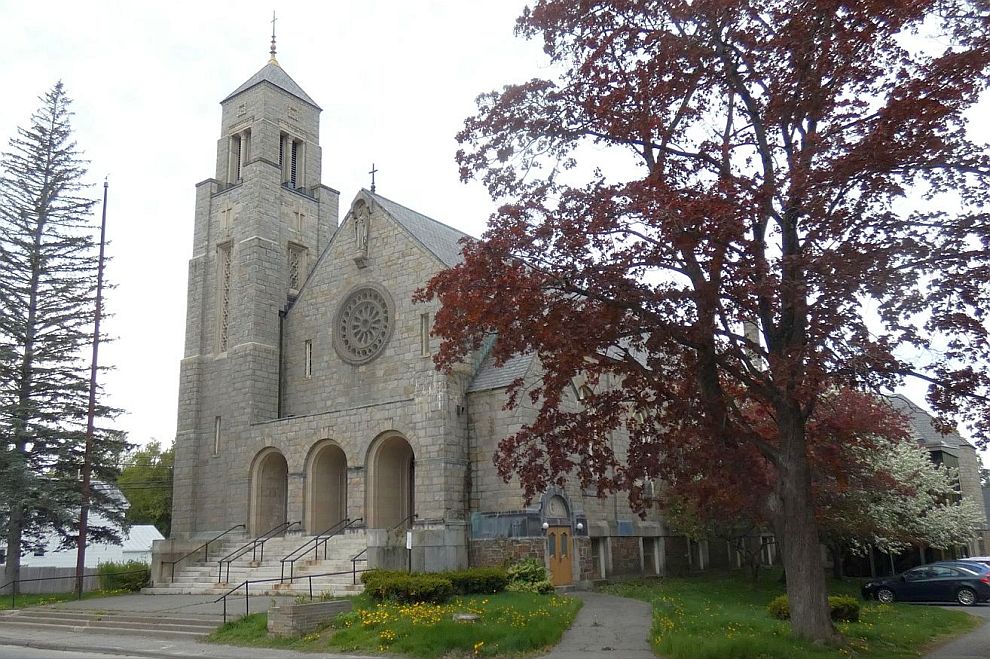
Jonathan Godbout dreams big. To him, the now vacant Sacred Heart Catholic Church at the corner of Gilman and Pleasant Streets in Waterville is not just an empty shell but a potential community gathering space, offering concerts and classes and selling food — a secular reprise of its once religious role.
The history of Sacred Heart began in 1905, when the diocese decided to create a separate parish in Waterville for English speakers, who were vastly outnumbered by francophones at the former St. Francis de Sales Church on Elm Street. Construction on Sacred Heart began early in the summer of 1907, and by January 1908, the basement of the new church was closed in and the first services were held. The entire structure as we know it today would not be completed until the spring of 1930, with the first services in the new 630-seat sanctuary held that Easter.
For the next 76 years, the building would serve the faithful, but by the early 2000s, church enrollment had declined to the point that the diocese chose to close the church. The last weekend masses were held there in 2006, and in March 2020, the diocese put the property on the market. After a proposal by a previous group of developers to turn the church into an events center fell to neighborhood opposition, Ware Butler, the lumber yard and building supply store around the corner on North Street, bought the church campus in March 2022. The campus includes the rectory next door and the two-story, parish office building behind the church.
Currently, the basement of the church, the original sanctuary, is being used to store furniture for the Capital Area New Mainers Project, of which Godbout is executive director. After refinishing the floors and installing sprinklers, though, he envisions dividing that cavernous space into performing arts classrooms, a maker lab, an art gallery, and a dance studio.
The basement was most recently used as a soup kitchen, which closed in 2020 after 40 years due to the COVID pandemic, the aging of the kitchen’s volunteer workforce, and the pending sale of the building. The kitchen itself will be upgraded and converted into commercial kitchen for cooking classes or for use by a caterer or by individual entrepreneurs preparing specialty foods to be sold to the public, like jam or salsa, but not consumed on site.
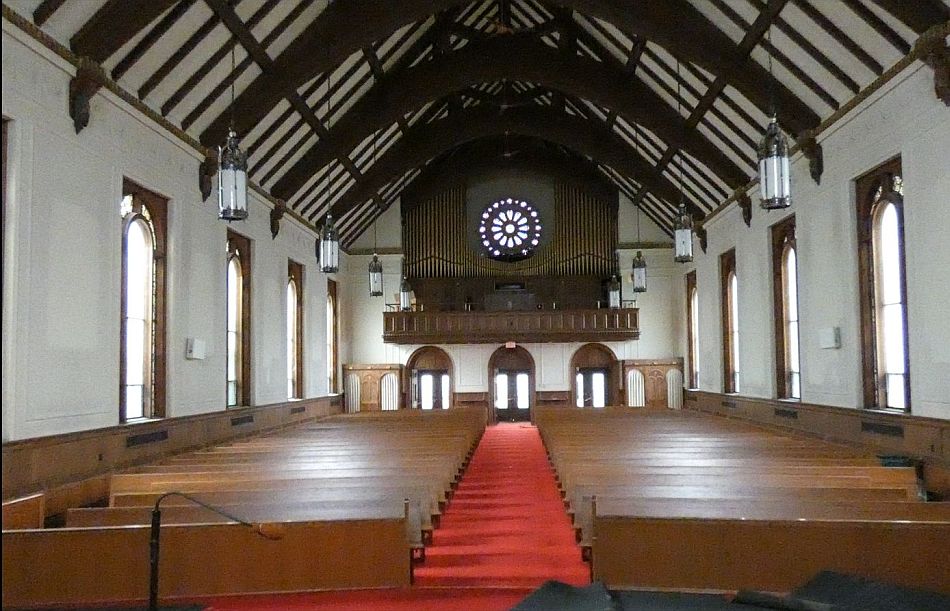
Upstairs, however, Godbout plans to turn the sanctuary into a food court. He will replace most of the pews with tables and benches, selling some of the pews to raise funds. “There are a lot of community members that are interested in the pews themselves,” he said.
His intent for the sanctuary “is to keep it flexible.” He envisions holding family-oriented events, including concerts, supper clubs, and movie nights. Mindful of the problems that sank the plans of the previous group of would-be developers, he wants to avoid having loud concerts or any that run late at night. “We’re really trying to keep this as a space that is not open past 9 p.m.,” he said.
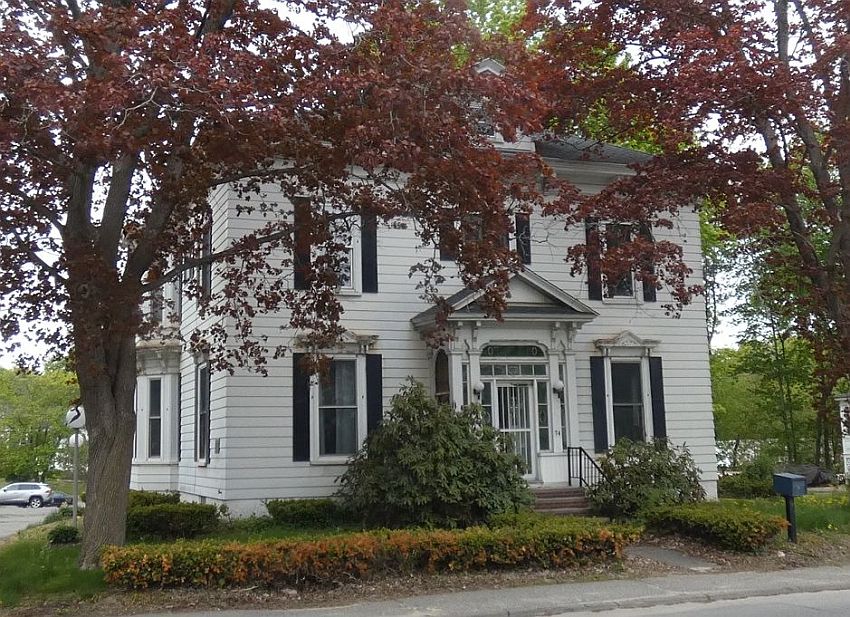
Built in 1897 as a private home and added on to over the years, the rectory next door has three, one-bedroom suites upstairs, each with a private bathroom. Each of these suites was meant for a priest, but they could be rented out long-term to individuals as co-housing. The downstairs has a meeting room and other communal spaces. He wants to upgrade the kitchen and get it commercially certified, so that the building could be run as a bed and breakfast.
An economics major who graduated from Colby College in 2008, Godbout did not plan to become a savior of old buildings. He was living in Cincinnati with his wife, who was working on her PhD, when he learned of a program through which one could buy distressed buildings cheaply. For a mere $1500, he bought a four-story, 10,500 square foot building erected in 1850. He converted it in restaurant and seven apartments. “That was my first foray into real estate development,” he said.
He did not have any prior experience with Sacred Heart Church, but had heard a lot about it. After making a presentation for Dirigo Labs in August 2024 on his redevelopment of the Cincinnati building and his use of historic tax credits to achieve that goal, he was approached by the Central Maine Growth Council to look at the Sacred Heart property. At the time, Ware Butler was using the office building but did not have a use for the church itself.
According to Godbout, “Ware Butler had been looking to move on from this, and so I did due diligence for about a year on the property.…As I was doing that, my father was finishing with the St. Andre’s Church, which has probably got a similar type of community connection as the Sacred Heart Church does in Waterville.” His father, Jim Godbout, the eponymous founder of a plumbing and heating firm in Biddeford four decades ago, led a $3 million renovation of the former St. Andre’s Catholic Church in that town into a teen center.
But when Hammond Lumber bought Ware Butler in July of last year, Godbout had to move quickly on the purchase, faster than he wanted too. Hammond didn’t want the church and associated office building and rectory. He bought the property in December 2025.
Godbout expects that the total cost to renovate the church and rectory to be around $1.3 million. “Fire suppression is the biggest expense driver in this property,” he declared. “It’s probably close to 200, 300 thousand dollars worth of sprinklers that will have to go in [the church].” He also noted that the building needs handicapped-accessible bathrooms.
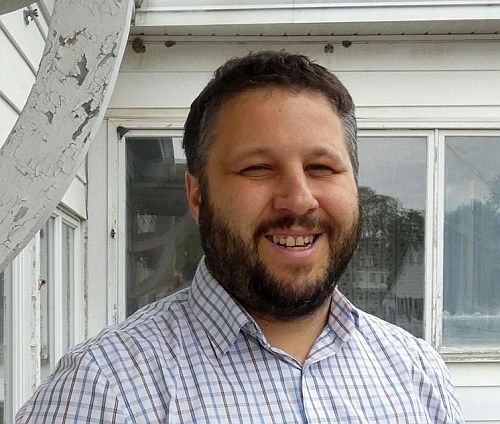
He, his father, and two other partners plan to raise most of that money through grants and donations. To that end, they are forming a nonprofit organization, Ticonic Commons, which already has five members on its board of directors. Godbout stated, “We initially were looking at a way to do it privately funded, but the more we got into it, the more we saw the emotional connection to the community, and so we’ve been recruiting board members from different facets, like people who grew up in the Catholic church here, as well as community members.…There are a lot of people who care about what happens here.”
While the timing of the overall project depends on when the money becomes available, Godbout would like to establish the “co-housing element in the rectory” by the end of 2026. The resulting rental income would help finance other aspects of the project. Rents paid by the tenants of the office building already are. Built in 1997, it is by far the newest building on the property and will not require any work. Most of its offices are already rented.
He also plans to have the chapel available by the end of the year. The chapel, right of the chancel, could become a coffee shop or a yoga studio.
The sanctuary would be the last space to be finished. He hopes to complete the fundraising by the end of 2027 and have the sanctuary open in 2028.
Besides grants and donations, he acknowledges that “a lot of elbow grease” will be needed to realize his vision. He and his partners work on the property every Friday afternoon and would welcome community volunteers. “We’d like to do some community clean-up days, really get people involved,” he said. “We really would like this to be a place that everyone feels like the community owns.”
For more information, you may visit www.ticoniccommons.org.
Download Full Newspaper: High Res | Low Res (Details…)
<— Previous Article • Summaries • Next Article —>
©2026 by Summertime in the Belgrades. All rights reserved.